
How to Know if Your Child Has Myopia (Nearsightedness)
When it comes to eye health, adults know just how important it is to keep a close watch on their vision. It’s always at the forefront of our minds because of how intensely it affects our day-to-day lives.
Children can also suffer from vision issues, but they may not recognize them as easily. If they’ve always seen things the same way, they might not realize that their vision isn’t as clear as it could be. That’s why it’s so important for parents to know what to look out for.
Myopia (nearsightedness) is one of the most common vision problems we encounter in young people. It’s a chronic and progressive condition affecting as many as one-third of children and adolescents worldwide. Let’s discuss this disorder and how you can recognize the symptoms in your own child to know if your child has myopia.
What is Myopia?
Myopia, also known as nearsightedness, is a very common vision condition. It causes faraway objects to appear blurred, while close objects remain clear. It often develops in childhood, particularly in school-aged children, and can gradually worsen as they grow.
The condition happens because of the shape of the eye. The eye grows longer than it should be, causing light to focus in front of the retina rather than on it. Without treatment, it can worsen over time, leading to more serious issues. Other visions can arise as a result, including glaucoma, cataracts, retinal detachments, and macular disease.
Common Signs Your Child May Have Myopia
While a professional examination is needed to properly diagnose myopia, a parent may notice some common signs. Here are some signs to look out for if you suspect your child has myopia:
- Squinting when trying to see far away
- Sitting too close to screens or the TV
- Holding books and devices too close to the face
- Complaints of blurry vision
- Frequent headaches
- Difficulty seeing the board in school
- Excessive blinking or eye rubbing
Subtle Signs of Myopia Parents Might Miss
While more obvious signs tend to stand out to parents, there are other signals that are easier to miss or attribute to other factors. If you notice that any of these apply to your child, it’s a good idea to look out for those more common signs. If things match up, it could mean the condition is making certain aspects of your child’s life harder than they need to be. Some things to be aware of include:
- Declining performance in school
- Avoiding activities that require distance vision, such as sports or outdoor play
- Short attention span during visual tasks
- Tilting the head or covering one eye
Risk Factors for Childhood Myopia
The reasons children develop myopia are multifaceted, involving both biological and environmental factors. In large part, myopia is a genetic condition, passed from parent to child. There is little to be done about genetic predisposition; however, early detection and treatment are best. If left untreated, myopia is likely to progress.
Recent studies show that there are other factors at play in the increase in incidence in the past decade or so. Studies point to increased screen usage and a sedentary lifestyle as potential factors as well. Children who spend more time outdoors and engage in physical play tend to have a lower risk.
When to Schedule an Exam for Your Child
Children don’t always realize that there is something wrong or that their vision is changing. Myopia can develop slowly, over time, and the gradual shift may be difficult for kids to detect.
Since treatment has a significant effect on the progression of nearsightedness, it’s important to stay on top of it. Common signs, such as squinting to see distant objects or holding books or tablets too close to the face, are good indicators.
If you notice any of these warning signs, it never hurts to have your child examined by a specialist. Myopia can drastically affect a child’s ability to perform in school, among other issues.
How Myopia is Diagnosed in Children
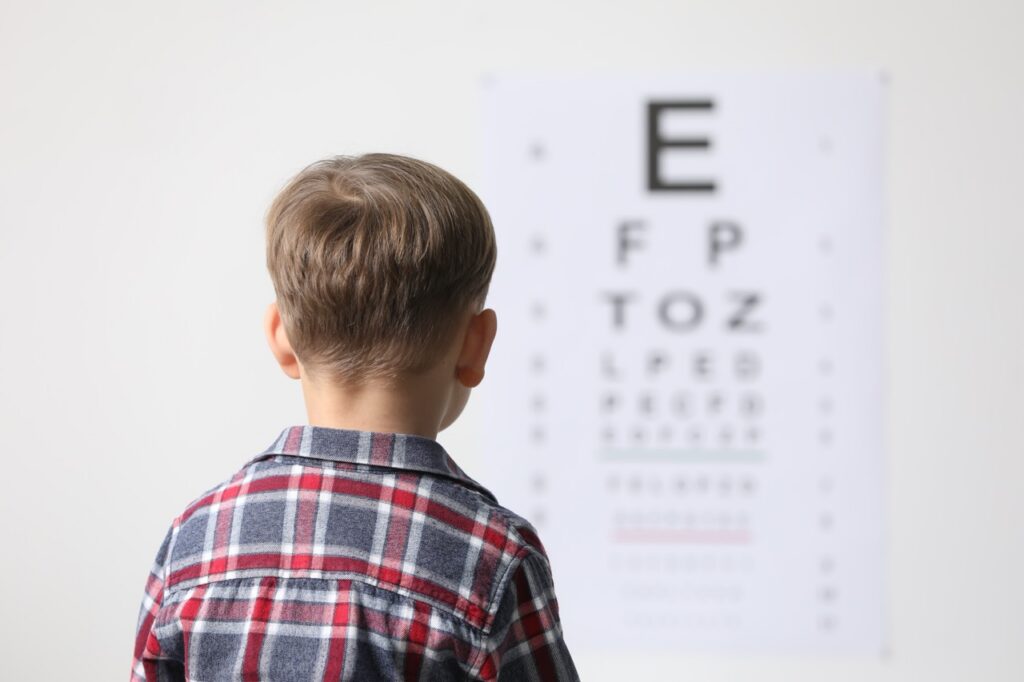
Diagnosing myopia is quick and painless. An ophthalmologist will perform an eye exam to determine how well your child sees. The exam will tell them how their eyes focus on objects at different distances. During the exam, the eye doctor will typically:
- Review your child’s medical and vision history
- Test visual acuity by having them read letters or symbols on a chart
- Check how the eyes focus and work together
- Measure refractive error to determine prescription strength
- Evaluate overall eye health
In some cases, they may use drops to temporarily relax the muscles that focus the eyes. This makes it easier to get an accurate prescription and detect early signs of myopia.
Treatment & Management Options for Myopia
There is no treatment that will reverse myopia in children; however, they may be eligible for LASIK surgery as they mature. At this point, the best plan is effective management and early treatment to prevent progression.
Common management options include prescription glasses or contact lenses. Your doctor may also prescribe low-dose atropine drops, which slow the progression of myopia. Another treatment option is Orthokeratology (Ortho-K), lenses that are worn overnight, which gently reshape the cornea.
Tips to Protect Your Child’s Vision
Healthy habits play a major role in reducing the risk and progression of myopia in children. Here are some ways you can help protect your child’s vision:
- Encourage outdoor time: Children who spend more time outside are at lower risk.
- Follow the 20-20-20 rule: Following every 20 minutes of screen time, make sure your child looks at something 20 feet away for 20 seconds.
- Limit excessive screen time: Long hours on tablets, phones, and computers increase eye strain.
- Maintain proper reading distance: Books and screens should be held 14-16 inches from the eyes.
- Prioritize adequate lighting: Reading and homework should always be done in well-lit environments.
- Keep up with annual eye exams: Regular check-ups allow doctors to monitor changes.
Have Concerns About Your Child’s Vision? Eye Associates of North Florida is Here to Help!
If you’re unsure whether your child has myopia, we can help. You can trust the experts at Eye Associates of North Florida to diagnose and manage your child’s myopia. Schedule an exam for personalized care and peace of mind that your child’s vision is in good hands.